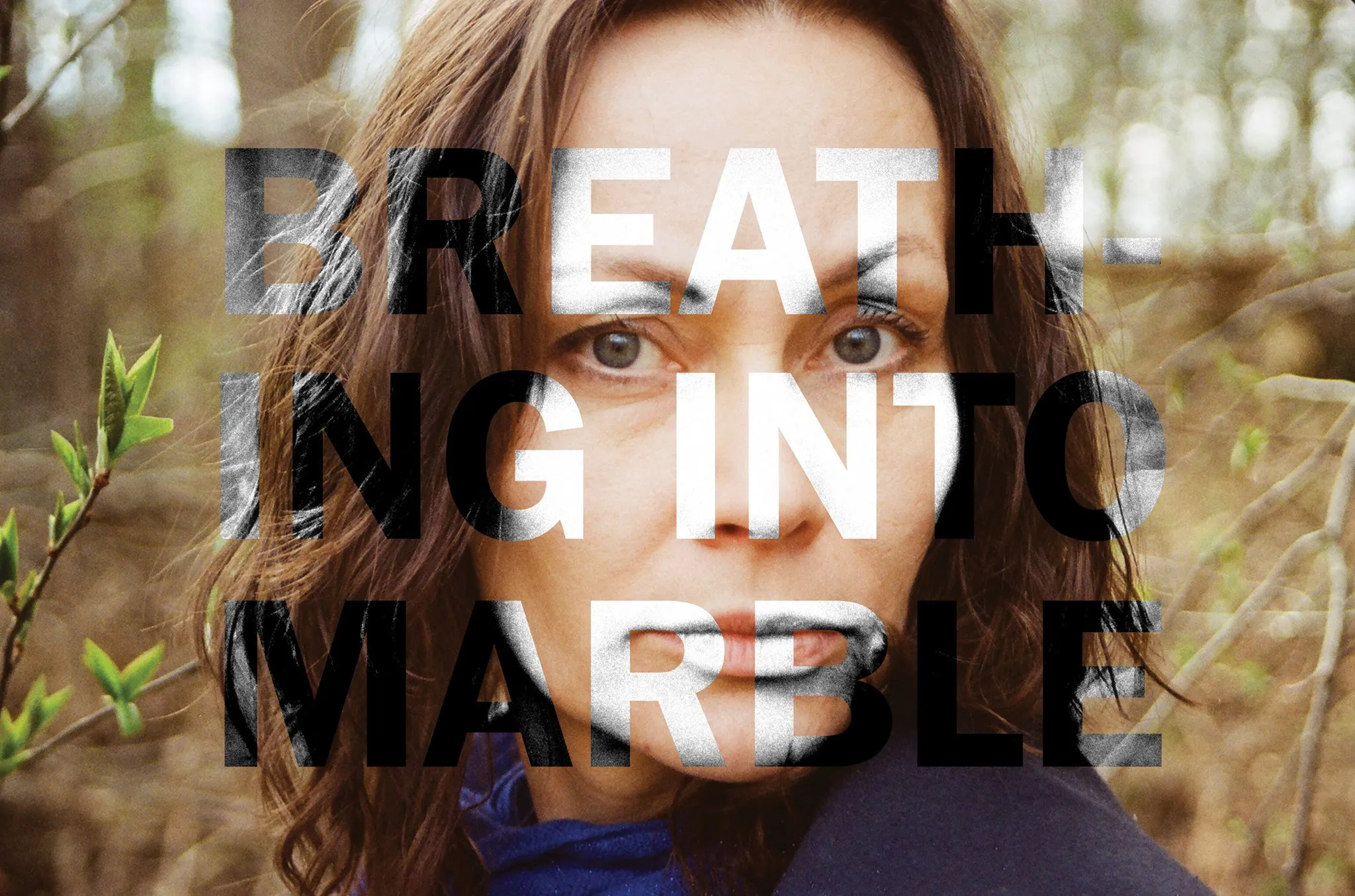
Breathing into marble
2016 · minority European co-production literary adaptation · feature fiction film
A high-tension literary family drama tracking adoption trauma within a Baltic-Croatian cross-border co-production framework.
This project credentials: Creative production · Service production · Minority co-production
Notes from the producer
I came into Breathing into Marble as the Croatian co-producer, not as its author. That distinction matters here. The film belonged to Giedre and to Dagne's team in Vilnius; my job was to make the Croatian leg of a minority co-production real, the VOX equipment agreement, Ivan Mihoci on sound, the applications, the contracts, version after version of the budget as it shrank and the secured share crept up.
I will be straight about the part that did not close. Our HAVC line stayed at application status; the Croatian money I was chasing never fully landed, and the shoot was completed near Vilnius anyway, in September 2016, while that was still open. The Latvians left in 2015 and came back on paper in 2017. None of that is the tidy version. But the film got made, it premiered in East of the West at Karlovy Vary in 2018, and the Croatian side held its end through all of it. For a co-producer that is the whole job: keep your part coherent while everything around it keeps moving.
- Matija Radeljak
The story
Breathing into Marble was the first feature by Lithuanian director Giedre Beinoriute, adapted from Laura Sintija Cerniauskaite's novel about an adoptive family that comes apart from the inside. Umjetnost za sve / Aning Film joined it not as the author of the film but as its Croatian co-producer, one leg of a project led from Vilnius by Dagne Vildziunaite's Just a Moment, with the Latvian house Mistrus Media as the third partner. The novel's moral pressure was never softened for financing; the harder problem was building a cross-border structure that could actually carry it.
From the first HAVC package in July 2015, the film was designed as a minority European co-production rather than a national one, and the paperwork reads like a project constantly being re-cut. The co-production budget contracted across three versions, from about 4.76 million HRK in 2015 to 4.63 million in early 2016 and 3.96 million in the November 2016 plan, while the secured share climbed to 89.4 percent. The Lithuanian Film Centre confirmed the production grant of 275,000 EUR, plus 8,688 EUR in development, and the Lithuanian Ministry of Culture had backed development earlier; the Croatian HAVC line, 55,000 EUR, stayed at application status to the end, and a Eurimages line was applied for but never counted on. The Latvian partner withdrew in September 2015, the film pressed on as a 78:22 Lithuanian-Croatian co-production, and Latvia only returned in a clean tri-national agreement dated August 2017.
The Croatian contribution was concrete, not cosmetic. Equipment came through a cooperation contract with Zagreb's VOX for the Lithuanian shoot period from November 2015, sound was handled by Ivan Mihoci, and the director's fee was structured as staged 6,000 EUR service payments tied to delivery milestones. Principal photography, with cinematographer Audrius Kemezys and a cast led by Airida Gintautaite and Sigitas Sidlauskas, wrapped near Vilnius on 19 September 2016 after 37 shooting days across three blocks, completed, the closing report notes, while Croatian financing was still unresolved.
The film had its international premiere in 2018 in the East of the West competition at Karlovy Vary and travelled the regional circuit from there. What the project proves for the studio is unglamorous and real: service co-production held together under financing that never fully closed on the Croatian side, a partner keeping its part of a cross-border film coherent long enough for the film to exist.
Recognition
- Karlovy Vary International Film Festival (East of the West)
- Tallinn Black Nights Film Festival (PimeAF / Baltic Film Competition)
- Haifa International Film Festival
- Vilnius International Film Festival (Kino Pavasaris)
Milestones
- 2015-07 — First HAVC minority co-production application and financing package assembled
- 2015-09 — LT-HR co-production agreement signed; Latvian partner withdraws, film continues 78:22
- 2015-11 — VOX equipment cooperation contract for the Lithuanian shoot period
- 2016-09-19 — Principal photography completed near Vilnius after 37 shooting days across three blocks
- 2017-08 — Clean tri-national LT-HR-LV co-production agreement
- 2018 — International premiere in East of the West competition, Karlovy Vary IFF
Outcomes
- Principal photography completed — Wrapped near Vilnius on 19 September 2016 after 37 shooting days across three blocks.
- Co-production maintained under uncertainty — Lithuanian-Croatian co-production carried through production despite unresolved Croatian financing.
- Lithuanian Film Centre grant awarded — Production support of 275,000 EUR confirmed (plus 8,688 EUR development).
- International festival premiere — Premiered in the East of the West competition at Karlovy Vary IFF in 2018 (97-minute feature).
Credits
- Giedre Beinoriute — Director and screenwriter
- Laura Sintija Cerniauskaite — Author of source novel
- Audrius Kemezys — Cinematographer
- Dagne Vildziunaite — Producer (Just a Moment, Lithuania)
- Matija Radeljak — Co-producer (Aning Film, Croatia)
- Ivan Mihoci — Sound director
- Airida Gintautaite — Cast (Izabele)
- Sigitas Sidlauskas — Cast (Liudas)
- Mistrus Media — Co-producer (Latvia)
- VOX — Equipment rental (Croatia)
Press & links
- Cineuropa review: Breathing into Marble
- Cineuropa interview with director Giedre Beinoriute
- 15min.lt: Kvepavimas i marmura literaturos prieglobstyje
- https://cineuropa.org/en/interview/356905/
- https://cineuropa.org/en/newsdetail/356902/
- https://www.15min.lt/kultura/naujiena/kinas/kvepavimas-i-marmura-literaturos-prieglobstyje-4-1036692
- https://www.imdb.com/title/tt8400850/awards/
- https://www.justamoment.lt/breathing-into-marble
- https://www.lkc.lt/filmu-registro-irasas/kvepavimas-i-marmura-2380
- https://www.lkc.lt/en/article/lithuanian-film-centre-announced-production-and-development-grants-for-2016-1st-session-50
- https://www.kviff.com/en/programme/film/50/25051-breathing-into-marble
- https://archive.kinopavasaris.lt/en/filmai/6629-breathing-into-marble