Le petit déjeuner
2013 · Short fiction film development-and-production package · Audiovisual production project
Intimate Brussels chamber drama where breakfast ritual collides with distant war noise.
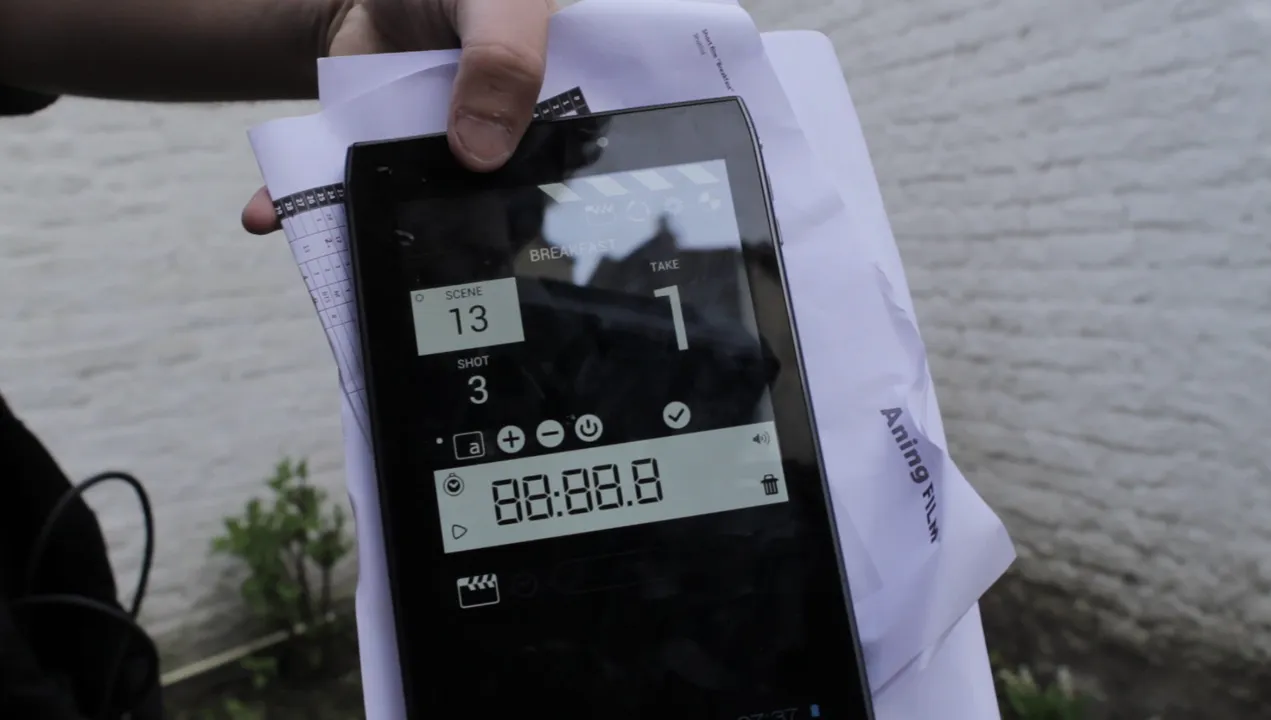
This project credentials: Creative production
Notes from the producer
Doručak was Salvatore Li Causi's film — he wrote it and directed it — and my job was to make a Brussels shoot actually happen on the money we had. We built the whole thing around a single day, 18 April 2012, because that was what the budget could honestly carry: roughly 25,000 EUR, most of it our own and independent money, a Croatian DoP brought in from outside, a local camera assistant on a signed contract, and the cast working inside an apartment. The script had cycled through a lot of drafts by then; the shoot did not have that luxury.
The honest part is the tail. Finishing dragged into 2013 — editing, colour, the DCP master — and I spent that year chasing the last of the money, including an application to HAVC that reframed the budget in kuna. Sound design closed in December 2013 and the film was delivered in March 2014. It played Pula's official selection in 2015. The wider festival list we aimed at — Cannes, Locarno, Sarajevo and the rest — was ambition on paper more than a shelf of acceptances, and I would rather say that plainly than pretend otherwise.
- Matija Radeljak
The story
Le petit déjeuner (Doručak / Breakfast) is a chamber drama written and directed by Salvatore Li Causi and produced by Matija Radeljak for Aning Film in Zagreb. It stays inside one Brussels apartment: a couple moving through an ordinary morning meal while a radio reporter transmits from Syria. The private distance between two people and a distant war sit in the same room.
The project was engineered to be small on purpose. Through March and April 2012 the screenplay cycled through a run of dated drafts, from early French-language versions to the Croatian screenplay locked on 3 April 2012. A shot list on 15 April, rehearsals on 16 and 17 April, and a full call sheet compressed the entire production into a single shooting day in Brussels on 18 April 2012 — a 06:00 to 20:00 operation that ran on preparation and timing rather than crew size.
The budget was just as deliberate. An initial financing sheet dated 15 March 2012 set total costs at 25,247.25 EUR across development, crew, cast, travel, post, and distribution, with planned public lines from the Croatian Audiovisual Centre and a Belgian public fund. The producer's own factsheet later rounded this to 25,000 EUR and reported roughly 75 percent already covered through own and independent investment. The structure was genuinely cross-border: Aning Film in Zagreb with Belgian co-producer Charly Dan Productions alongside Plan 9 Production, a Croatian director of photography (Damir Kudin), a Brussels-based cast (Peter Connelly, Myriem Kheddiou), and a locally contracted camera assistant.
Finishing was slower than shooting. Late-2012 notes still flagged open editing, colour, and DCP-master costs, and a 2013 application to the Croatian Audiovisual Centre reworked the numbers into a formal budget of 162,759.09 HRK. Sound design was finalised in December 2013, and a rights-transfer agreement records the film as completed and delivered in March 2014. It went on to an official-selection slot at the Pula International Film Festival in 2015; a wider circuit of targets across Cannes, Locarno, Sarajevo and others was mapped but never confirmed as a shelf of acceptances.
What the film demonstrates is not scale but control: a producer assembling a multinational cast and crew, two countries of financing, and a one-day shoot into a finished, festival-ready work for the price of a modest commercial. It is a compact proof of lean international co-production — the discipline required to make a real film travel on a short film's budget.
Recognition
- Pula International Film Festival — Official selection
Milestones
- 2012-04-03 — Croatian screenplay locked after a rapid March-April draft cycle
- 2012-04-18 — One-day principal photography in Brussels (06:00-20:00)
- 2012-10-03 — Signed statement authorizing Aning to realize financing
- 2013-12 — Final sound design completed
- 2014-03 — Film completed and delivered
- 2015 — Official selection, Pula International Film Festival
Outcomes
- Completed and delivered — A rights-transfer agreement records the film as finished and delivered in March 2014.
- One-day cross-border shoot — Full production executed in a single day in Brussels on 18 April 2012, on a roughly 25,000 EUR budget.
- Festival premiere — Official selection at the Pula International Film Festival, 2015.
Credits
- Salvatore Li Causi — Writer / Director
- Matija Radeljak — Producer (Aning Film)
- Damir Kudin — Director of Photography
- Peter Connelly — Cast
- Myriem Kheddiou — Cast
- Bojan Kanjera — Executive Producer
- Luka Rukavina — Executive Producer
- Charlelie Jourdan — Camera Assistant
- Charly Dan Productions — Co-producer (Belgium)
- Plan 9 Production — Co-producer
Press & links
- https://havc.hr/hrvatski-film/katalog-hrvatskih-filmova/dorucak
- https://havc.hr/eng/croatian-film/croatian-film-catalogue/breakfast?changeType=true
- https://www.imdb.com/title/tt4501072/
- https://vimeo.com/54675171
- https://www.imdb.com/name/nm4290285/
- https://aningfilm.hr/about-us/
- https://www.imdb.com/name/nm4660486/
- https://www.imdb.com/title/tt4501072/fullcredits/