Life as a coin
2015 · minority co-production short animated film · film
Italian-Croatian animated short tracing a two-euro coin's journey through Europe's everyday transactions.
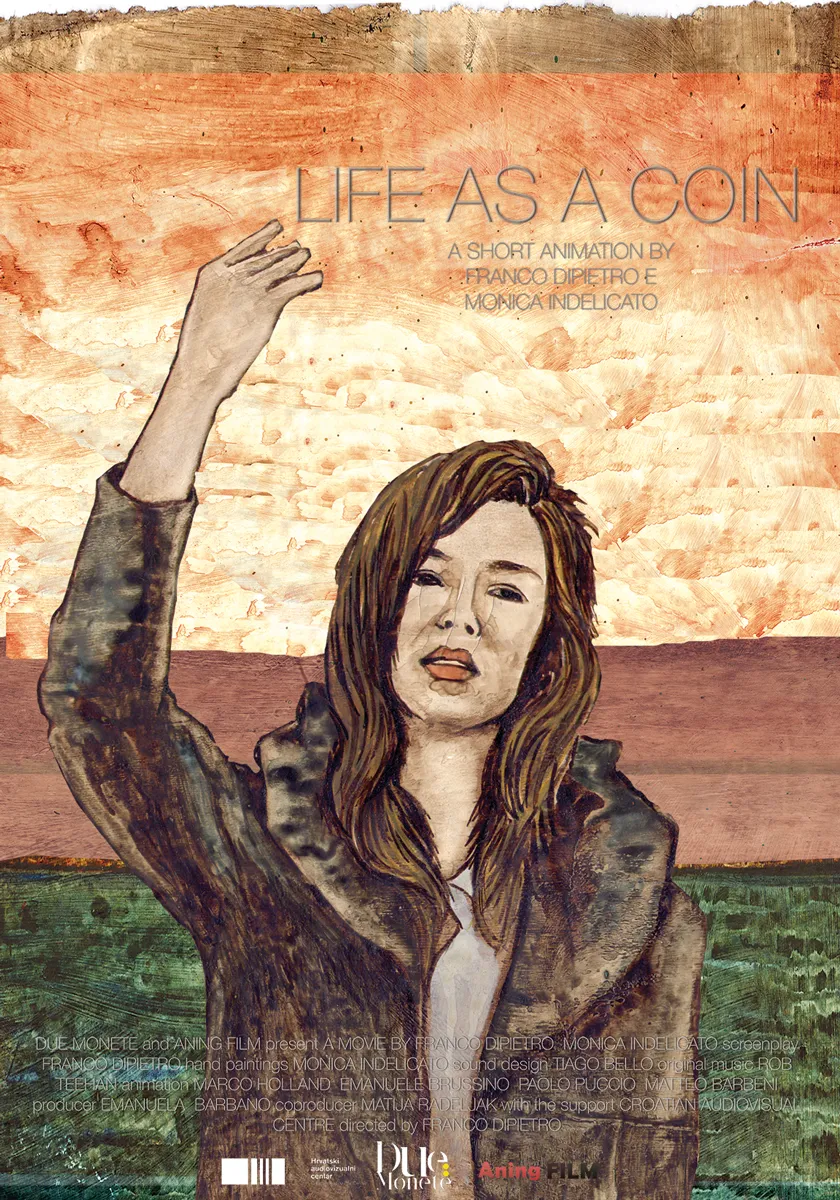
This project credentials: Minority co-production
Notes from the producer
Life as a Coin taught me what minority co-production actually costs the minority partner. We came in as the Croatian side with HAVC's support behind us, and Franco and Monica's film was genuinely good, but most of my year on it was cheques, guarantees, invoices, and the timing of transfers to Torino. When the partnership broke down, I signed a completion agreement in July 2014 that let us finish the film and, in the same stroke, gave up our profit share, our cut of any festival prizes, and rest-of-world rights. I did it because a delivered film I no longer fully own is worth more than an unfinished one I do.
I am honest about the loose ends. The DCP, the Dolby mix, and the Croatian version got made and delivered, and the payments I can trace run into January 2015. But final HAVC sign-off, the complete chain-of-rights handover, and the last 8,000 kn were still hanging on other people's paperwork, and I cannot claim they closed cleanly. What I can claim is that the film got finished, and that the boring machinery of getting it there was mine to run.
- Matija Radeljak
The story
Life as a Coin is a ten-minute animated short built as an Italian-Croatian minority co-production, written and directed by Franco Dipietro and hand-painted by Monica Indelicato. Its premise is small on purpose: a two-euro coin passes from hand to hand across stations, streets, markets, and border crossings, and its powerlessness over where it goes and who it meets becomes a quiet argument about chance, money, and love. The look holds that idea in the frame, with hand-painted 2D artwork layered into compositing and camera moves that let a still, tactile surface travel.
On the Croatian side the film was produced by Aning (Aning usluge d.o.o.) with Matija Radeljak as co-producer, opposite Due Monete of Torino, led by producer Emanuela Barbano. The structure was a formal minority co-production anchored to the Croatian Audiovisual Centre (HAVC), which awarded 149,946.48 kn of support; Due Monete carried the larger 233,376.24 kn share. Between a first draft budget of April 2013 and a revised status budget of 14 October 2013 the frame settled at 577,272.55 kn, with sponsorship and a planned crowdfunding campaign left as preparatory lines that never closed. The film was presented at the Venice Film Market on 1 September 2013, announced a fortnight earlier in a producer-issued press release.
The concept was never the hard part. Delivery was. Through late 2013 the correspondence is all cheques, proforma invoices, bank guarantees, and the cashflow timing that decides whether a crew gets paid, and by 2014 the partnership had reached a breach that had to be settled rather than argued. A completion agreement signed on 16 July 2014 reset the terms so the film could actually be finished, and it did so at the Croatian co-producer's expense: Aning gave up its 10 percent profit share, its share of festival-award income, and rest-of-world distribution rights in exchange for a clean path to completion.
What Aning delivered was the unglamorous half of a co-production that makes the glamorous half exist. The Croatian expense report totals 157,800.00 kn across the foreign co-production fee, legal and financial consulting, travel, DCP and Dolby 5.1 delivery through Bold studio, promotion and DVD screeners, and a full Croatian-language version, with dubbing recorded in 2015 (the voice cast includes Slavko Sobin). Payments ran on SWIFT transfers to Due Monete in July and August 2014 and were still being reconciled in a consolidated bank receipt dated 17 January 2015. This is the service the project actually proves: minority co-production and completion management under a public-funding regime, where the real work is holding the legal, financial, and technical choreography together long enough for the picture to be delivered.
Not everything is tied off in the surviving record. Final HAVC acceptance, the full chain-of-rights handover, and a last 8,000 kn tranche, contractually conditioned on HAVC's final payment, are not conclusively closed in the papers that remain. The film exists, finished and versioned; the paperwork behind it ends mid-sentence.
Milestones
- 2013-04-26 — Financing and budget status sheet finalized for the HAVC minority co-production application
- 2013-06-12 — Progress update submitted to HAVC with a preliminary animation preview
- 2013-09-01 — Presented at the Venice Film Market (announced 19 August 2013)
- 2013-10 — Co-production agreement signed between Due Monete and Aning usluge
- 2013-10-14 — Revised status budget set at 577,272.55 kn
- 2013-12-13 — Author contract signed with editor Zrinka Ivanko
- 2014-07-16 — Completion agreement signed to reset terms and finish the film
- 2015-01-17 — Consolidated international bank receipt documenting 2014 transfers
Outcomes
- Finished animated short — Ten-minute Italian-Croatian animated short completed (production year 2014; IMDb tt4291878).
- HAVC minority co-production support — Croatian Audiovisual Centre support awarded at 149,946.48 kn.
- Croatian-language delivery — Full Croatian-language version, DCP and Dolby 5.1 delivery via Bold studio; dubbing recorded 2015 with voice cast including Slavko Sobin.
- Completion agreement reset — July 2014 completion agreement removed the Croatian co-producer's 10 percent profit share, festival-award share, and rest-of-world rights to secure completion.
- Croatian-side spend — Documented Croatian expenditure of 157,800.00 kn across co-production fee, post, legal/financial, travel, and promotion.
Credits
- Franco Dipietro — Writer and director
- Monica Indelicato — Painter (artwork)
- Matija Radeljak — Co-producer (Croatia)
- Emanuela Barbano — Producer (Due Monete)
- Zrinka Ivanko — Editor
- Bojan Kanjera — Production coordinator (Aning)
- Slavko Sobin — Voice cast
- Riccardo Lombardo — Voice cast
- Aning usluge d.o.o. — Croatian co-producer
- Due Monete S.n.C. — Italian co-producer
- Bold studio d.o.o. — DCP and Dolby 5.1 delivery
- Peglanje snova j.d.o.o. — Promotion and Croatian-version production
Press & links
- Life as a Coin — IMDb title page
- Life as a coin — Berlinale Talents project profile
- Life as a Coin — CinemaItaliano film entry
- CinemaItaliano — Italian-Croatian co-production / Venice Film Market news item
- https://www.cinemaitaliano.info/news/19814/dvdvendita
- https://www.imdb.com/title/tt4291878/
- https://www.berlinale-talents.de/bt/project/profile/117484
- https://nuovo.cinemaitaliano.info/lifeasacoin
- https://www.berlinale-talents.de/bt/talent/franco-dipietro/profile
- https://www.imdb.com/video/imdb/vi1903996697