Život + režije
2008 · independent feature dialogue drama · film project
Independent Zagreb feature-film project combining intimate relationship drama with inventive public micro-donation fundraising strategy.
Notes from the producer
Život + režije was my attempt to make a small, dialogue-driven film about two people and a shared apartment, and to finance it without pretending institutions would show up first. The story of Monika and Patrik was intentionally modest; the ambition was all in how we planned to pay for it. We built the whole thing as a package in 2009: targets of a March start and a September premiere, a first production meeting on 4 March, a full 944,950 HRK budget that we later split down to a 235,100 HRK shooting phase so the immediate ask was honest. Mia Bučević wrote it with me, Zrinka Rogulj ran production, and we lined up camera and music before we had the money.
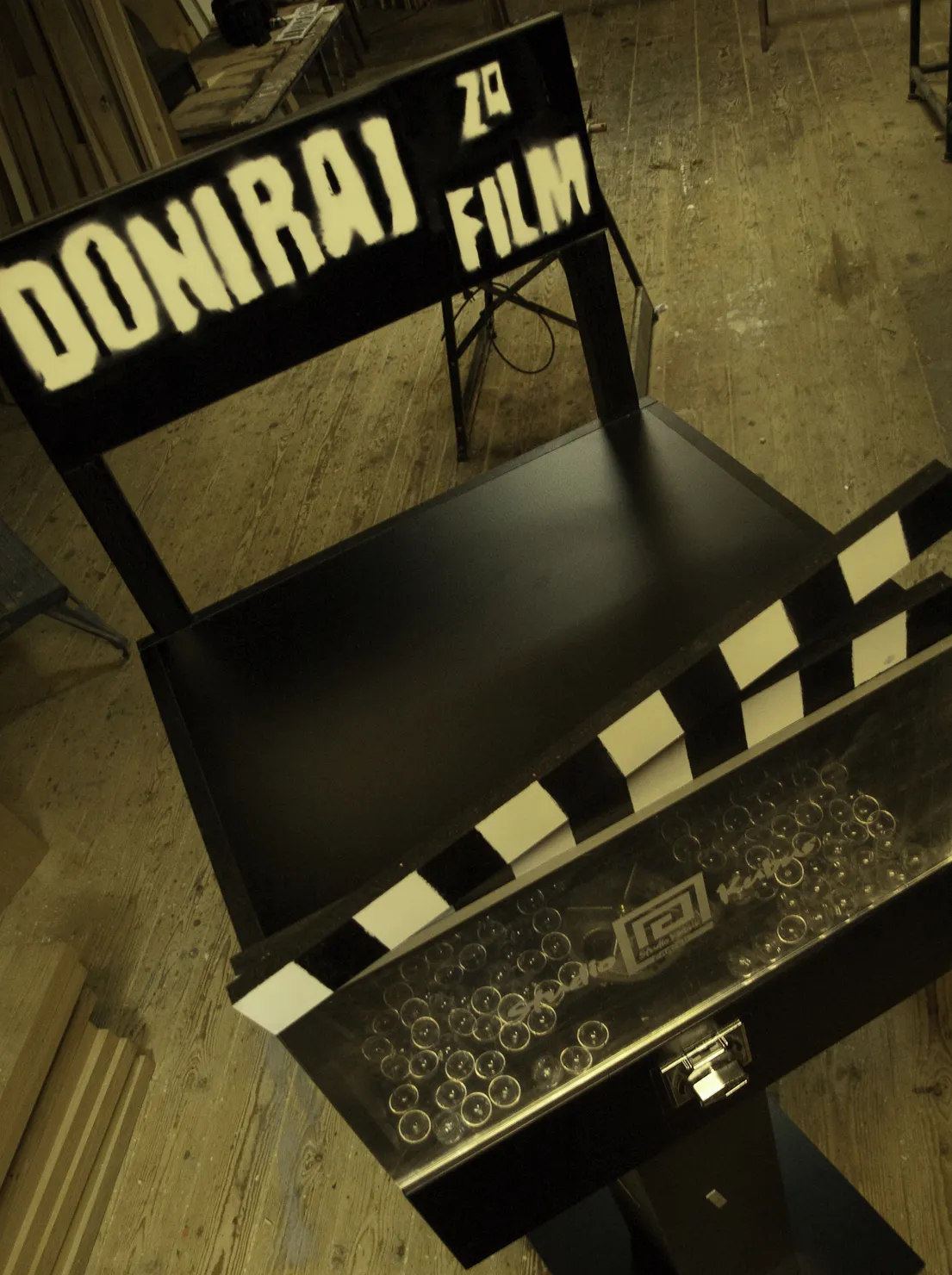
The part I am still proud of is the funding logic. Alongside a normal tiered sponsorship request, including a memorandum to the Westin, we designed Slatkiši, candy machines meant to turn small change into a film budget, which is the same instinct that later became Projekt 365. We registered online for Cannes in January 2010 and prepared a media plan running into 2011.
I will not dress up the ending. We never confirmed a lead, never rolled a frame of principal photography, and I have no signed sponsor to point to; a budget file I was still editing in mid-2011 is honestly the last real trace of the effort. It stayed a development package. But the machinery we built around it, the budgeting, the sponsorship architecture, the audience-financing idea, is the part that kept working in other projects for years afterward.
- Matija Radeljak
The story
Život + režije (working English title Our Life, Expenses Paid) is an independent Zagreb feature that Matija Radeljak developed through his organisation Studio KUBUS. The drama is deliberately small: Monika and Patrik, two people who have shared an apartment and roughly seven years of habit, reach the moment when one of them chooses to leave rather than repeat. The script, synopsis and treatment keep the conflict at apartment scale, built from timing, silence and the small decisions of people who know each other too well, rather than reaching for event.
Development was run as a system, not a wish. A project package set 1 March 2009 as the targeted production start and 1 September 2009 as the targeted premiere, and the first production meeting on 4 March 2009 fixed roles, communication rules and task flow. The authorial core was defined early: Radeljak producing, directing and co-writing; Mia Bučević on screenplay and original story; Zrinka Rogulj as executive producer; Ranka Latinović on camera; Anita Andreis on music.
The financing was worked out to the line item rather than sketched. A headline envelope of roughly 950,000 HRK tightened into a 944,950.00 HRK recapitulation, with postproduction the heaviest load at 444,000 HRK and promotion at 84,500 HRK, while a separate 235,100.00 HRK shooting-phase budget isolated the immediate cash the team needed to get a camera rolling. Sponsorship was tiered, not improvised: gold, silver and standard asks at 200,000, 75,000 and 20,000 HRK, formalised in a February 2009 memorandum to the Westin Zagreb.
Where the project turned genuinely inventive was in refusing to wait on institutions. Alongside the sponsor matrix, the Slatkiši (sweets) concept proposed branded candy machines in bars and cinemas that would turn small change into film financing, and the campaign identity, bilingual black-and-white posters under Our Life, Expenses Paid, hand-drawn donation-box sketches and photographs of real Zagreb apartments, was built so that branding and fundraising were one instrument. The same instinct later fed Projekt 365.
Outreach widened through 2010: a dedicated media plan running from March 2010 into March 2011, and an online entry to the Festival de Cannes registered on 28 January 2010 under Studio KUBUS (submission ID 63A5049). But the archive is honest about where it stopped. Lead casting stayed open, principal photography stayed a future target, no sponsor signature is preserved, and a budget workbook still being edited in June 2011 reads as a team reconciling scope rather than one that reached a finish line. What the project proves is not a finished film but a method, development, financing architecture and audience-facing fundraising assembled into one transferable production discipline.
Milestones
- 2009-02-27 — Sponsorship memorandum sent to the Westin Zagreb, defining gold/silver/standard tiers (200,000 / 75,000 / 20,000 HRK)
- 2009-03-04 — First production meeting: roles, communication rules and task flow defined
- 2010-01-13 — Dated synopsis draft centred on Monika and Patrik
- 2010-01-28 — Online entry to the Festival de Cannes registered under Studio KUBUS (ID 63A5049)
- 2010 — Dedicated media-exposure plan prepared (March 2010 to March 2011)
- 2011-06-14 — Budget workbook still being edited (conflicted-copy file), indicating continued scope reconciliation
Outcomes
- Production setup completed — The 4 March 2009 kickoff meeting documented team onboarding, role hierarchy, communication rules and production-goal alignment.
- Cannes online submission — A Festival de Cannes online entry was submitted in 2010 under Studio KUBUS and recorded with identification number 63A5049; any selection was to be communicated later by the festival.
- 2010 media-exposure plan — A structured publicity document with defined communication channels and PR windows (March 2010 to March 2011) was prepared.
- Remained in development — Lead casting stayed under negotiation, principal photography was never documented as started, and no signed sponsor commitment is preserved; budget files were still being reconciled in June 2011.
Credits
- Matija Radeljak — Producer, director, co-screenwriter
- Mia Bučević — Screenwriter, original story author
- Zrinka Rogulj — Executive producer
- Simona Dimitrov Palatinuš — Production representative
- Ranka Latinović — Director of photography
- Anita Andreis — Composer
- Silvija Dogan — Public relations and creative advisor
- Studio KUBUS, umjetnička organizacija — Production company
- Westin Zagreb — Sponsor (approached)